Source Volvo Rear Wheel Oil Seal for Engine, Transmission, Rear Axle
Compare 30 available Volvo rear wheel oil seal options from Chinese manufacturers. Buyers can evaluate models like OS-045 and ACOS series for engine, transmission, and rear axle applications with customizable sizes and NBR material.
Key considerations
Products List


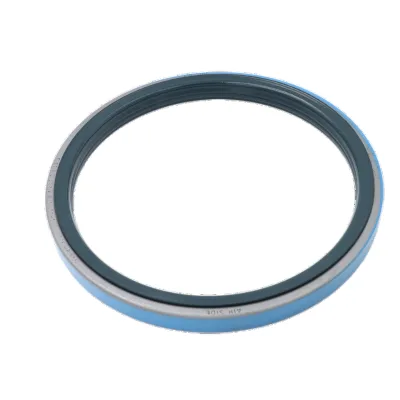


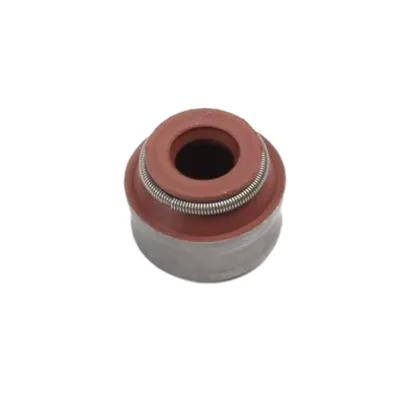


Comprehensive Sourcing Guide
Strategic Sourcing Guide for Volvo Rear Wheel Oil Seals
Understanding Technical Specifications and Model Variants
When sourcing oil seals specifically for Volvo rear wheel applications, the primary challenge lies in navigating the extensive range of model numbers and dimensional requirements. The market data indicates a diverse portfolio of available units, ranging from specific part numbers like 21347087 and 21990221 to custom dimensions such as 178207.716.5mm and 1251489.7mm. These variations suggest that a single "universal" seal does not exist for all Volvo rear axle configurations. Buyers must treat the product model number not merely as a label but as a critical technical constraint. For instance, the observed specifications include models labeled ACOS-36, ACOS-56, ACOS-60, and ACOS-61, alongside the OS-045 and OS-046 series. These alphanumeric codes often correspond to specific lip configurations, pressure ratings, or housing fits unique to different Volvo chassis generations.
The physical construction of these seals is equally critical. The available product attributes highlight the use of NBR (Nitrile Butadiene Rubber) as the primary material. This material choice is standard for general automotive applications due to its resistance to petroleum-based oils and moderate temperatures. However, the sourcing guide must emphasize that NBR is not the only option, and buyers should verify if specific Volvo models require FKM (Viton) or other high-performance elastomers for extreme temperature or chemical resistance. The lip type is another vital observation; the data explicitly lists "Lips Type" as a distinct attribute, implying that single-lip, double-lip, or spring-loaded designs are available. The correct lip configuration is essential for preventing contamination from the rear axle environment while retaining lubrication. Furthermore, the pressure rating is noted as "Pressure Type," indicating that these seals are engineered to withstand the internal hydrostatic pressures found in transmission and rear axle assemblies.
Dimensional precision is non-negotiable. The observed size data includes complex multi-part measurements like "1251489.7mm+125148.3156*8.1/9.3," which suggests that some applications may require a combination of seals or a specific tolerance stack-up. Buyers must ensure that the supplier provides 2D or 3D drawings that match the exact housing bore and shaft diameter of the specific Volvo model in question. The availability of customizable sizes and the acceptance of customer designs further reinforce that off-the-shelf solutions may not always align with the precise engineering tolerances required for modern Volvo rear-wheel assemblies.
Compliance, Certification, and Standard Verification
In the B2B procurement of automotive components, compliance is as important as the physical part itself. The supply chain data indicates that products are available with ISO Standard certifications, specifically noted as "ISOStandard Component:Standard Component." This suggests that reputable suppliers adhere to international quality management systems, which is a baseline requirement for sourcing parts intended for major vehicle manufacturers like Volvo. However, buyers must not assume that every listed product automatically meets Volvo's proprietary OEM standards. The distinction between "Standard" and "Nonstandard" is explicitly mentioned in the product attributes, requiring the buyer to verify that the specific part number selected is classified as a standard component compatible with Volvo's engineering specifications.
The concept of "Standard or Nonstandard" also extends to the manufacturing process. The data notes that the "Standard or Nonstandard" attribute exists, and some listings specify "STD" as the standard. This implies that while generic industry standards exist, Volvo may have specific internal standards that supersede general ISO guidelines. Buyers should request documentation proving that the seal meets the specific ISO standard referenced by the supplier, rather than accepting a generic claim. Additionally, the "Accpet Customers' Designs" standard suggests that custom engineering is possible, but this path requires rigorous validation to ensure the custom design does not compromise the vehicle's safety or performance.
Certification checks should also extend to the origin of the components. The product origin is listed as "China," with a specific focus on "Hebei, China." While this region is a known manufacturing hub for automotive seals, buyers must verify the specific factory's compliance history. The presence of "ISOStandard" in the data is a positive indicator, but it should be cross-referenced with the actual certificate of conformity provided for the batch. Furthermore, the "Quality" attribute describes the product as "New & High Quality Replacement (Alternative) After," which implies these are aftermarket components. While they are replacements, the term "Alternative" necessitates a verification process to ensure they do not deviate from the original equipment manufacturer (OEM) performance benchmarks. The warranty period of 3-12 months is another compliance metric; a supplier offering a warranty within this range demonstrates confidence in their product's durability, but the specific terms must be clearly defined in the purchase agreement.
Cost Drivers and Pricing Dynamics
The pricing landscape for Volvo rear wheel oil seals is characterized by a wide range, with observed values spanning from $0.02 to $49 USD. This significant variance is not arbitrary but is driven by several key factors, including material composition, dimensional complexity, and the level of customization required. The lower end of the price spectrum likely corresponds to standard, high-volume production items with simple geometries and basic NBR material. In contrast, the higher price points may reflect specialized designs, custom lip configurations, or seals requiring tighter tolerances and more rigorous quality control processes.
The Minimum Order Quantity (MOQ) is a critical cost driver in this market. The observed MOQ range is broad, extending from 1 unit to 1000 units. For buyers seeking to test a new supplier or replace a single seal, an MOQ of 1 is advantageous, though the unit cost may be higher. Conversely, buyers purchasing in bulk can leverage the lower MOQ thresholds to negotiate better pricing, but they must balance this against inventory holding costs. The data also highlights a specific MOQ of 6 units and another of 10 PCS, indicating that some suppliers have fixed batch requirements that may not align with a buyer's immediate needs. Understanding these thresholds is essential for accurate total cost of ownership calculations.
Customization is another major factor influencing cost. The product attributes confirm that "Customization: Available" and "Customized Color" are options. While customization allows for a perfect fit, it inherently increases the unit price due to the setup costs and lower production efficiency associated with non-standard runs. Additionally, the "Service" attribute lists "OEM or ODM," suggesting that buyers can choose between buying a branded component (potentially higher cost) or an unbranded, generic equivalent (potentially lower cost). The "Packing" options, ranging from "Carton or as Your Required" to "Pp Bag+carton," also impact the final price, as specialized packaging for logistics or branding incurs additional charges. Buyers must carefully evaluate whether the cost savings from a lower-priced, generic seal outweigh the potential risks of compatibility or longevity issues compared to a higher-priced, OEM-equivalent part.
Typical Applications and Performance Requirements
The application scope for these oil seals is explicitly defined in the product data, covering "Auto Parts, Lndustry and So on." More specifically, the usage is detailed as "Engine, Transmission, Rear Axle." This confirms that the seals in question are designed for the harsh environments found in the drivetrain of heavy-duty vehicles, including Volvo trucks and commercial vehicles. The rear wheel application is particularly demanding, as these seals must withstand high rotational speeds, exposure to road debris, water, and varying temperatures. The attribute "High Speed" is listed, indicating that the seals are engineered to handle the rotational dynamics of the wheel hub without generating excessive heat or failing due to centrifugal forces.
The "Usage" attribute also includes "Rear Axle," which is a critical distinction. Rear axle seals must manage the lubrication of the differential and axle gears, often under high pressure. The "Pressure Type" attribute reinforces this, suggesting that the seals are designed to contain lubricant under pressure while preventing external contaminants from entering. The "Type" attribute lists "Haplotype" and "Assembled," which may refer to the structural design of the seal. An "Assembled" type suggests a multi-component design that may offer better sealing performance or easier installation compared to a single-piece unit.
Performance requirements are further defined by the "Technics" attribute, which lists "Press" as the manufacturing method. This indicates that the seals are formed using a pressing technique, which is standard for achieving the necessary density and shape consistency in rubber components. The "Color" attribute, listing "Black, Brown and So on" or "Customized Color," is primarily aesthetic but can sometimes indicate the type of rubber compound used, although this is not a definitive technical indicator. The "Warranty" of 3-12 months suggests that the expected service life of these seals is substantial, but it also implies that premature failure is a risk that buyers must mitigate through proper installation and maintenance. The "Delivery Time" of 3-5 working days indicates a responsive supply chain, which is crucial for minimizing vehicle downtime in fleet operations.
Supplier Evaluation and Service Capabilities
Evaluating a supplier for Volvo rear wheel oil seals requires a deep dive into their service capabilities and operational flexibility. The data highlights that "OEM or ODM" services are available, meaning suppliers can produce parts under a buyer's brand or design specifications. This is a significant advantage for buyers looking to source private-label components or those requiring custom engineering solutions. The "Service" attribute also implies a level of partnership beyond simple transaction, suggesting that suppliers are willing to engage in long-term collaboration.
The availability of "Free Samples" is a critical evaluation point. The product attributes state, "Free Samples are available. Please contact us freely." This allows buyers to physically inspect the quality, material, and dimensions of the seal before committing to a large order. It is a low-risk method to verify that the "High Quality Replacement" claim holds true in practice. Buyers should utilize this opportunity to test the seal in a controlled environment or on a test vehicle to ensure it meets the specific performance requirements of the Volvo rear wheel assembly.
The "Delivery Time" of 3-5 working days is another key metric for supplier evaluation. In the context of automotive procurement, lead time can make or break a supply chain. A supplier that can deliver within this timeframe demonstrates a robust logistics network and efficient production scheduling. However, buyers must also consider the "MOQ" constraints. A supplier with a low MOQ of 1 or 6 units may be ideal for emergency replacements, while a supplier with an MOQ of 1000 may be better suited for long-term, high-volume contracts. The "Packing" options, including "Carton or as Your Required," indicate flexibility in logistics, which can be crucial for buyers with specific shipping or storage requirements.
Quality Control and Long-Term Procurement Strategies
Quality control is paramount when sourcing components for critical vehicle systems like the rear wheel assembly. The "Quality" attribute describes the product as "New & High Quality Replacement (Alternative) After," which sets a high bar for performance. However, buyers must implement their own quality control measures to ensure consistency. This includes verifying the "Certification" status, specifically the "ISOStandard," and ensuring that the "Standard" or "Nonstandard" classification matches the vehicle's requirements. The "Drawings" attribute, which accepts "2D or 3D," allows for precise verification of dimensions against the original Volvo specifications.
Long-term procurement strategies should focus on building relationships with suppliers who offer "OEM or ODM" services and can provide consistent quality over time. The "Warranty" of 3-12 months provides a safety net, but it is essential to understand the terms and conditions of this warranty. Buyers should also consider the "Customization" aspect as a long-term strategy. By working with suppliers to develop custom seals that perfectly match the Volvo rear wheel specifications, buyers can reduce the risk of compatibility issues and improve the overall reliability of their fleet.
The "Product Origin" being "China" and specifically "Hebei, China" should not be a deterrent, provided that the supplier has a proven track record of quality. Buyers should conduct regular audits and request test results to ensure that the manufacturing processes remain consistent. The "Selling Units" being "Single item" suggests that the market is flexible, allowing buyers to purchase small quantities for testing or large quantities for bulk orders. Ultimately, the success of long-term procurement depends on a balance of technical compatibility, quality assurance, and supplier reliability. By carefully evaluating these factors, buyers can secure a steady supply of high-performance oil seals that meet the rigorous demands of Volvo rear wheel applications.
FAQs
What materials are used for Volvo rear wheel oil seals?
NBR is the primary material used for these seals. This nitrile rubber offers resistance to petroleum-based oils and moderate temperatures suitable for engine and transmission applications.
Can I get free samples for testing before ordering?
Free samples are available upon request. Buyers should contact the supplier directly to arrange testing without incurring initial costs for verification.
Which certifications do these oil seals typically hold?
Products often carry ISO Standard certifications. Buyers must verify that specific batches meet the referenced ISO standards rather than assuming generic compliance.
How long is the delivery time for these parts?
The standard delivery time is 3 to 5 working days. This ensures a responsive supply chain to minimize vehicle downtime during fleet operations.
What is the minimum order quantity for these seals?
MOQs range from 1 to 1000 units depending on the supplier. Some listings specify fixed batch requirements like 6 units or 10 pieces.
Are custom dimensions available for specific Volvo models?
Yes, customizable sizes and customer designs are accepted. Buyers should provide 2D or 3D drawings to ensure exact housing bore and shaft diameter matches.
Where are these oil seals manufactured?
The products originate from Hebei, China. This region is a known manufacturing hub for automotive seals requiring strict quality verification.
What warranty periods are offered for these components?
Warranty periods typically range from 3 to 12 months. This indicates confidence in durability but requires clear terms in the purchase agreement.